Breaking the Toxic Loop: How Tigreen is Solving the Fashion Industry's Wastewater Crisis


The Chemical Byproduct Dilemma
It takes 2,700 liters of water to produce a single cotton T-shirt. That is enough drinking water to sustain one person for almost three years. For years, the sustainability conversation around the fashion industry has fixated on this massive extraction of resources. But the real crisis isn't just how much water the industry takes—it's the terrifying paradox of what happens when they try to give it back.
When cotton is dyed, printed, and finished, the water becomes a toxic soup of heavy metals, phenols, and synthetic dyes. To solve this, regulations forced textile hubs to implement wastewater treatment facilities (ETPs). The goal was simple: chemically treat the water before releasing it.
But a groundbreaking new study from the University of Massachusetts Amherst has exposed a fatal flaw in conventional treatment.
The standard chemical processes used to treat textile wastewater are inadvertently creating highly toxic, chlorinated byproducts—specifically chloroform and bromoform. By attempting to chemically scrub the water clean, facilities are generating volatile compounds that are severe occupational hazards for workers and an unmapped danger to the downstream environment.
We aren't actually cleaning the water. We are chemically shifting the toxicity from one form to another.
The Tigreen Solution: Radical Bubble Purification (RBP)
We cannot chemically scrub our way out of a chemical pollution crisis. This is exactly the problem that Tigreen’s patented Radical Bubble Purification (RBP) technology was engineered to solve.
Unlike conventional treatment plants that rely on adding more chemicals to treat wastewater, Tigreen takes a completely different, physics-driven approach using advanced Dissolved Air Flotation (DAF).
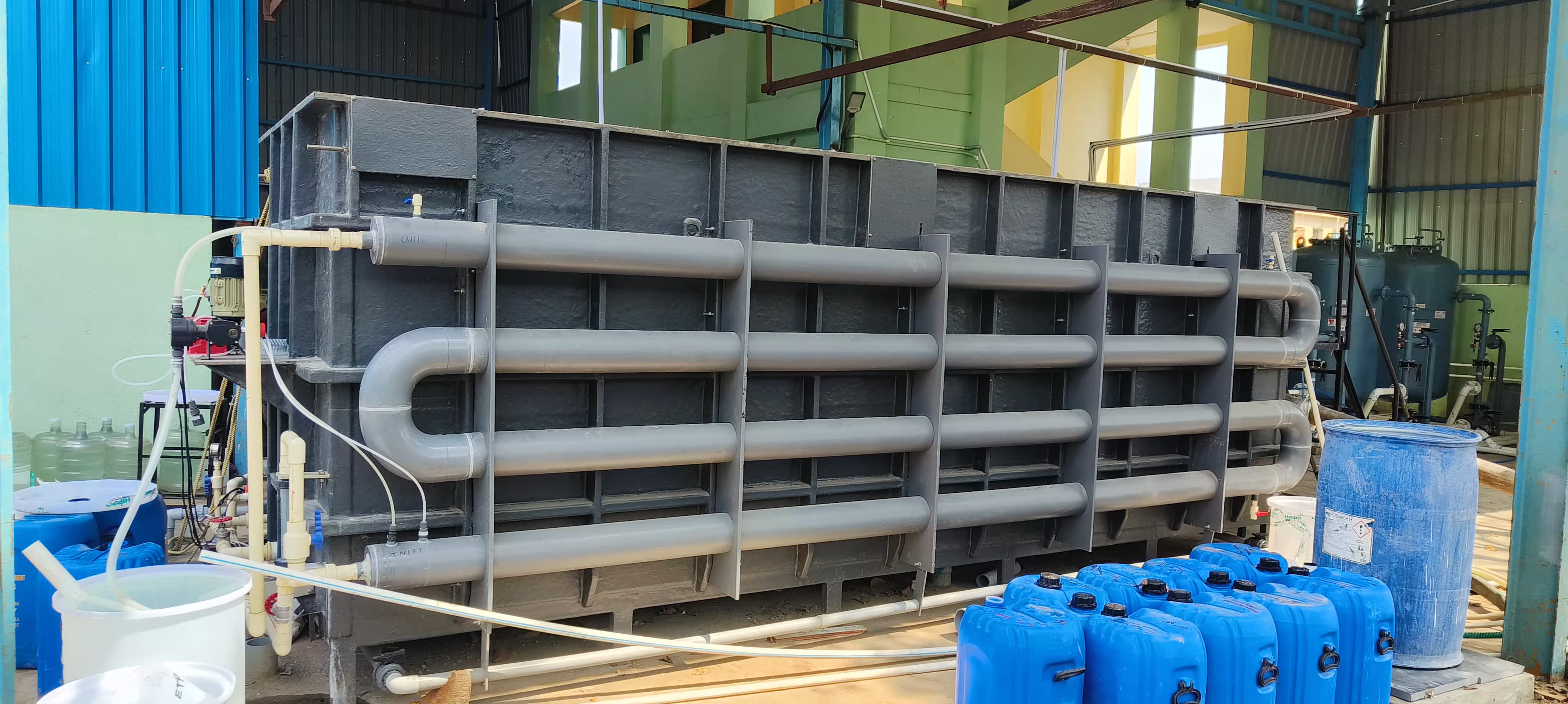
Here is how Tigreen breaks the toxic loop:
- Chemical-Free Treatment: The Tigreen system uses absolutely no harmful chemicals for treatment, entirely avoiding the creation of toxic chlorinated byproducts like chloroform.
- Microbubble Physics: The system generates high-concentration microbubbles smaller than 10 microns. These negatively charged bubbles attract positively charged pollutants, lifting contaminants to the surface.
- Free Radical Degradation: As the microbubbles lift the sludge, they create free radicals that naturally and efficiently degrade harmful chemicals and dyes without leaving a toxic footprint.
Engineering a Sustainable Future
The result is a system that doesn't just avoid creating new toxins; it's highly efficient. Tigreen's ETPs achieve up to 90% water recycling, meaning that 2,700-liter footprint per T-shirt can be drastically slashed.
Furthermore, the systems are designed for the realities of modern manufacturing:
- Plug-and-play: Portable, modular design requiring minimal civil construction and taking up 90% less real estate space than conventional plants.
- Ultra-Low Energy: Power consumption ranges from just 2 KW to 20 KW depending on capacity, reducing electricity consumption by up to 60%.
- No Blowers or Compressors: Meaning reduced noise, lower maintenance, and no odor.
The UMass Amherst study is a harsh wake-up call: the era of treating wastewater with more toxic chemicals is over. To truly clean up the textile industry, we need smarter, chemical-free technology.
With Tigreen’s RBP systems, we can finally recycle industrial wastewater without secondary chemical hazards.
About the Author: Tigreen Team
The Tigreen Team consists of expert process engineers, environmental compliance specialists, and sustainability innovators working to design high-efficiency, space-saving wastewater recycling systems.
